
Quick Answer: Yes, a dirty air filter can cut heat output by choking warm air circulation, causing restricted airflow, uneven room temperatures, higher bills, and even safety shutoffs that feel like no heat.
When it’s freezing outside, even a small airflow problem becomes obvious fast. A furnace filter that looks like a minor maintenance detail can turn into the reason your home won’t warm up, your system runs forever, or the unit keeps shutting down. This guide explains exactly what’s happening, what you can safely fix yourself, what’s a red flag, and how to prevent it, without sounding like a manual.
Why Filter Condition Matters More in Cold Weather
In cold weather your system runs longer, so any airflow restriction from a clogged filter multiplies into lower comfort and higher stress on parts.
Most homes use a forced-air heating system: the blower pulls return air through the filter, the furnace heats it, and the system pushes it back through the supply ducts. When a clogged filter creates airflow blockage, everything downstream suffers, especially when outdoor temperatures demand long runtimes.
Two big things happen in winter:
- Your heating system is operating near peak demand, so it needs clean airflow to maintain thermostat temperature / setpoint.
- The system’s safety limits are reached faster if heat builds up inside the cabinet (more on that below).
If you’re already planning seasonal prep, your winter pillar on hvac system winter care pairs perfectly with this topic because filter health is one of the most common hidden causes of winter comfort complaints.
What the Filter Actually Does (And What it Doesn’t)
The filter protects equipment and indoor air, not by making heat, but by letting air move through the furnace safely and evenly.
A filter captures dust and debris before they hit internal components. That matters because the filter impacts:
- warm air circulation
- airflow across the heat exchanger
- how hard the blower must work
- indoor air quality (IAQ)
It also traps particles that would otherwise recirculate through your vents, like allergens, pollen, mold spores, and pet hair / pet dander. When the filter is overloaded, it can no longer perform either job well.
So… Does a Dirty Filter Affect Heat? Here’s the Real Chain Reaction
Yes, when airflow drops, the furnace can’t deliver consistent heat to rooms, and it may even shut down to protect itself.
Here’s the step-by-step mechanical reality:
1) Restricted Airflow Reduces Heat Distribution
Less air moving through the system means less heated air delivered to rooms, creating uneven heating and cold spots.
With restricted airflow, some rooms get heat late or not at all. That’s why you can feel warm near the furnace but cold in bedrooms or upstairs, classic heat distribution (room-to-room) trouble.
2) Longer Cycles and Higher Bills Follow Text Here
When airflow is blocked, your furnace runs longer to try to hit the thermostat setpoint, driving longer heating cycles and higher costs.
Your system tries to compensate by running more often or for longer. That’s why you’ll see rising utility bills even if you didn’t change your thermostat habits.
3) Short Cycling Can Start
A clogged filter can trigger short cycling, where the system turns on and off repeatedly without completing a full heating cycle.
Short cycling is hard on equipment and usually produces uneven comfort. It often feels like the furnace tries but never settles into steady heat.
This is a great moment in your site flow to reference Reliable Hvac Services as your resource for ongoing upkeep and winter reliability, because recurring short cycling can mean more than the filter alone.
Can a Dirty Air Filter Cause Overheating? Yes - Here’s Why
Yes, can a dirty air filter cause overheating is a real issue: airflow restriction traps heat inside, raising internal temperature and triggering safety limits.
A furnace relies on proper airflow to carry heat away from the heat exchanger. When airflow drops, heat stays inside the system longer. That can lead to:
- overheating furnace
- safety switch / limit switch activation
- system shutdown to prevent damage
When that happens, homeowners often report: the furnace starts, then stops, or it blew warm air for a minute, then went cold. That’s not the furnace being weak, it’s the unit protecting itself.
Can a Dirty Filter Cause Heat Not to Work? What No Heat Really Means
Yes, can a dirty filter cause heat not to work is often true because repeated overheating triggers shutdowns that look like total heat loss.
If your furnace keeps tripping safety protection, it may refuse to run until temperatures normalize, or until it’s reset by a tech. In severe cases, airflow issues can contribute to component damage that escalates into complete furnace failure.
This is where many no-heat calls turn into EMERGENCY HVAC situations during a freeze, even though the root cause began as a basic maintenance issue.
Signs Your Furnace Filter Is Dirty (Fast Checks)
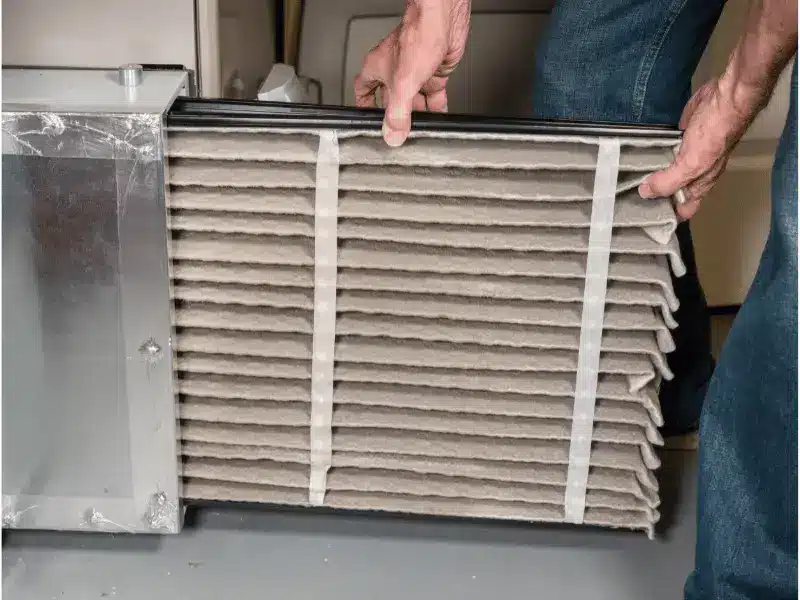
The easiest test is light: if you can’t see light through the filter, it’s likely clogged enough to reduce airflow.
Common signs include:
- weak airflow from registers
- rooms heating unevenly (cold spots)
- unusual runtimes (longer heating cycles)
- more dust in the home
- worsening allergies (poor indoor air quality (IAQ))
Quick Fix: Turn off the system, slide out the filter, and compare it to a new one. If it’s dark and packed, replace it, don’t shake it out.
What a Dirty Furnace Air Filter Does to Components Over Time
A dirty furnace air filter increases strain across multiple parts, accelerating wear and raising repair risk.
A clogged filter forces the blower to pull air harder. Over time that can contribute to:
- blower fan stress
- blower motor overheating or failure
- fan damage
- greater mechanical wear and tear on internal components
And if overheating becomes frequent, it can stress the heat exchanger. A heat exchanger crack / damage is serious because it can allow combustion gases into the airflow.
Those gases can include carbon monoxide, sulfur dioxide, and nitrous oxide. That’s why consistent filter maintenance is both a comfort issue and a safety issue.
If you’re building a winter readiness routine, this also fits under broader Heating Services planning since airflow and safety checks are core to winter reliability.
Troubleshooting Checklist You Can Do Safely at Home
Start with the filter, then verify airflow paths, then confirm thermostat and return air pathways.
Use this quick, safe sequence (no tools beyond a flashlight):
- Power off the furnace at the thermostat (or switch)
- Inspect the furnace filter dirty condition and replace if needed
- Ensure return vents aren’t blocked by furniture or rugs
- Open interior doors to improve circulation
- Confirm supply registers are open and unobstructed
- After replacing the filter, run the system 10–15 minutes and feel airflow
Tip: Always install the filter with the airflow arrow pointing the correct direction; a backwards filter can reduce performance too.
Filter Replacement Timing (The Winter Rule That Works)
During winter, check the filter monthly and replace it as soon as it looks loaded, especially with pets, allergies, or construction dust.
Most guidance lands in this range:
- Every 1–3 months for standard homes
- Monthly if you have pets, heavy dust, or allergies
- More often during extreme cold because runtime increases
To make this easier, keep 2–3 spare filters on hand. Your future self will thank you on the coldest night of the year.
Filter Types and Why Fit Matters (Don’t Accidentally Restrict Airflow)
Higher-efficiency filters catch more particles, but the wrong type or poor fit can worsen airflow restriction.
Common filter categories:
- fiberglass (basic, low capture)
- pleated (good balance for many homes)
- HEPA/high-efficiency options (high capture, but may not fit all systems)
- washable (requires proper drying to prevent odor or moisture issues)
The best filter is the one that fits correctly and matches your system’s needs. A loose filter lets debris bypass into the cabinet and ducts.
This is also where duct performance ties in: if dust is bypassing filters, it can load duct surfaces, affecting airflow and comfort, making Duct work services a logical next step for homes with chronic dust and uneven heating.
How Dirty Filters Affect AC Too (Yes, Even in Winter)
A dirty filter doesn’t just hurt heat, airflow problems can impact cooling components and system efficiency year-round.
Even if you’re not cooling today, your HVAC is still one system. A dirty filter can increase dust build up that later affects cooling performance and airflow balance. That’s why smart homeowners treat filter habits as part of total-home comfort, including Air Conditioning Services planning for the next season.
When Furnaces Fail Overnight From a Filter Issue
Overnight failures often happen because the system overheats, hits a limit switch, and shuts down repeatedly until it can’t recover.
If Furnaces Fail Overnight, the home cools quickly, especially in below-freezing temps. Filter-related shutdowns can look like a mystery because the furnace worked earlier.
Quick Fix: If it’s safe and you have access, replace the filter first, then restore normal airflow and restart the system. If the unit continues to shut down after a clean filter, stop troubleshooting and call for help.
This is exactly why every household should know how to Handle No-Heat Emergencies safely: keep people warm, avoid unsafe heaters, and address the most likely root causes first.
Symptoms-To-Cause Table (Fast Diagnosis)
Matching symptoms to causes helps you fix the right thing first, especially during freezing nights.
What you notice | Likely cause | Safe first step |
Weak airflow at vents | clogged filter / blocked return | Replace filter; clear return |
Some rooms cold, others warm | airflow imbalance / duct issues | Open doors; check registers |
Furnace starts then stops | overheating furnace limit trip | Replace filter; check airflow |
Runs constantly but never warms | restricted airflow / heat loss | Filter + insulation/drafts |
Dusty home, worse allergies | filter overloaded | Replace filter; vacuum returns |
The Most Overlooked Factor: Return Air Path and Duct System Balance
Even with a new filter, a blocked return path or closed doors can reduce airflow and mimic filter problems.
Competitors often mention ducts, but many skip the return path reality: if the return can’t pull air freely, the blower still struggles. This is especially common in bedrooms with doors closed and no return vent. Crack doors at night or add airflow pathways (professionally if needed).
Call Wasatch Front Heating & Cooling for Fast Winter Comfort
If your home still isn’t heating evenly after a filter change, or you’re seeing repeated shutdowns, get expert help before the next freeze. Wasatch Front Heating & Cooling can diagnose airflow problems, safety-limit trips, and performance issues quickly and safely.
Call (801) 510-2997 to schedule service and keep your home warm all winter.
FAQs About (Does a Dirty Filter Affect Heat?)
Does a dirty filter affect heat immediately, or only over time?
It can be immediate once airflow becomes restricted enough, but most homes notice the problem gradually as the filter loads and runtime increases.
Can a dirty filter cause heat not to work even if the furnace turns on?
Yes, if airflow is too low, the furnace may overheat and shut down, which feels like “no heat” even though it starts briefly.
How do I know if my filter is clogged without tools?
Hold it up to a light source. If you can’t see light through it, it’s likely clogged enough to reduce airflow.
Is a cracked heat exchanger related to dirty filters?
Dirty filters can contribute to overheating and stress, and chronic overheating can increase risk to the heat exchanger over time.
What should I do if I suspect combustion gases or carbon monoxide?
Leave the area, ventilate if safe, follow detector instructions, and do not keep running the system.



"These guys did an excellent job on our AC repair. Very friendly people who showed up exactly when they said they would. Communication was great throughout the whole process."